The Biology of Ageing
Dear Friends,
One of the most fascinating questions in longevity science is whether ageing follows a common biological pattern, regardless of who we are or even what species we belong to.
A major new study published in Nature has taken a significant step towards answering that question. Researchers analysed more than 11,000 tissue samples from mice, rats, monkeys, and humans, making it one of the largest investigations of ageing biology ever conducted.
Their conclusion is striking: despite the many ways ageing appears on the surface, the underlying biology is remarkably similar.
Across species, organs, and even individual cell types, ageing was associated with the same broad changes. Processes linked to inflammation, cellular stress, and damage repair became increasingly active, while processes involved in energy production, metabolism, and cellular maintenance became less active.
In simple terms, ageing appears to involve a gradual shift away from resilience and towards chronic stress and inflammation.
Perhaps even more interestingly, the researchers found that interventions known to promote health and longevity tended to reverse these patterns. Calorie restriction, cellular reprogramming, and exposure to youthful biological signals all moved cells towards a more youthful state. Conversely, chronic disease, inflammation, radiation exposure, and metabolic stress accelerated the ageing signature.
The study identified several biological markers that appeared repeatedly across ageing, disease, and mortality risk. The broader message is one we have encountered many times before: inflammation sits at the centre of many of the processes that drive ageing and age-related disease.
This does not mean ageing is simply inflammation. Ageing is a complex process involving many interconnected systems. However, the findings reinforce a growing body of evidence suggesting that reducing chronic, unnecessary inflammation may be one of the most important strategies for supporting long-term health.
Importantly, this research also highlights something hopeful. Biological age is not fixed. The molecular patterns associated with ageing can move in both directions. They can accelerate under conditions of stress and disease, but they can also slow down, and in some circumstances partially reverse.
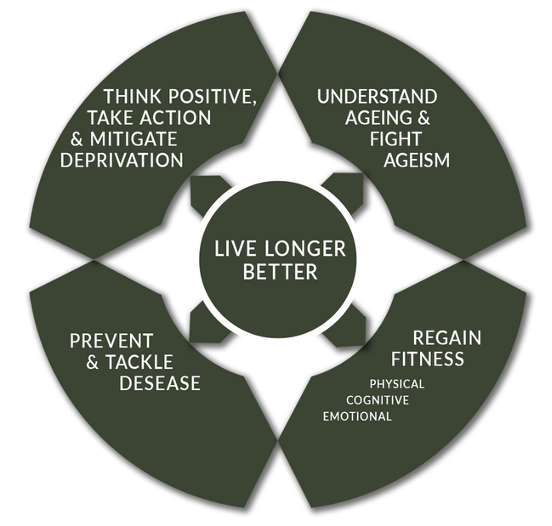
What is particularly interesting in the world of research is that the influence of a person’s environment is becoming increasingly recognised as more important than the influence of their genes in determining their healthy life expectancy. There is a shift in focus from being primarily on the genes and the internal process to a focus on the impact of the social and physical environment; to put it another way, there is a shift in focus from the Chromosome to the Exposome. Linked to this is a growing awareness that the ageing process is less important in determining one’s state of health, at least until the late 90s, than three other processes - loss of fitness, disease (due to exposure to risk and not because of one’s genes), and social pressures, notably deprivation. So there is a shift from biology and genetics to ecology and the environment and the best description of this paradigm shift is in the book Understanding Living Systems by Raymond and Denis Noble.
So what can we do today?
While scientists continue to explore future therapies aimed at the ageing process, there is already strong evidence that other factors influence many of the same biological pathways highlighted in this study. Regular physical activity, good sleep, maintaining muscle mass, eating a diet rich in plants and minimally processed foods, managing stress, and staying socially connected all help. The Oxford Lonevity Project's paradigm is simple and most clearly expressed, as Wittgenstein emphasised, in the picture below.
What gives us optimism is that studies like this continue to reveal that the biology of healthy ageing is not mysterious. While new technologies may expand what is possible in the future, many of the foundations of healthy longevity remain surprisingly familiar.
The science becomes more sophisticated every year, but the message remains reassuringly consistent: the choices we make (as individuals and as a society) each day continue to matter.
Sincerely,
Sir Muir Gray