The paper above provides evidence that isometric training reduces blood pressure as well as increasing strength. This second paper proposes that to regain muscle strength one should not just do isometric exercise such as Wall Sits, but also isotonic exercise, like dancing or walking on rough ground, or non-invasive techniques to stimulate the nervous system:
“Alternative approaches could include non-invasive brain or spinal stimulation techniques, exercises (eg, resistance training, task-specific motor learning frameworks, balance training, and reactive stepping training).”
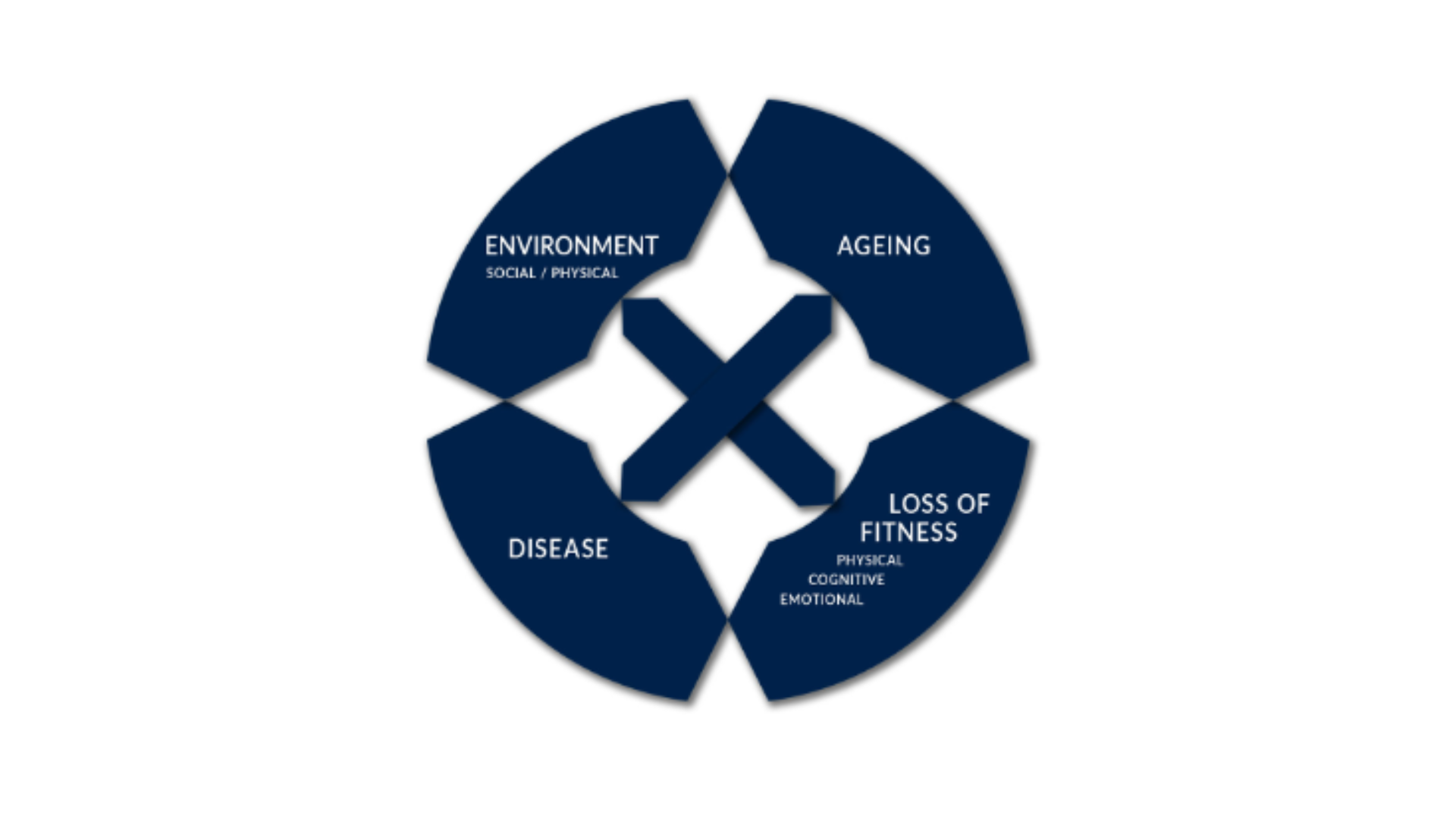
This is part of a bigger debate about what is meant by sarcopenia (Greek for “poverty of flesh”). There is a debate about whether it is a disease like rheumatoid arthritis, normal biological ageing or a loss of fitness, and of course loss of strength is not just the result of lifestyle but also of social pressures, notably the ageist prejudice that strength training is irrelevant for older women. These are the four factors in the Oxford Longevity Project’s paradigm to explain what is happening as we live longer, and all four contribute to muscle loss.
It is sensible for almost everyone to assume that they are losing muscle strength faster than can be explained by the biological process of ageing, and to take action to regain lost strength as part of a programme that will also increase the three other aspects of physical fitness: stamina, skill and suppleness. So dancing and walking on rough ground will increase strength, as will playing tennis, swimming or painting a wall. For people with limited mobility, standing up from and sitting down on a chair several times in a row, marching or dancing while seated, lifting tins or water bottles, and exercising in water are all good places to start. It is not only isometric exercise that will help you regain lost muscle.
Reference:
Orsetto LBR, et al. Reframing sarcopenia as a disease of the ageing motor system. The Lancet Healthy Longevity. 2026;7(7).